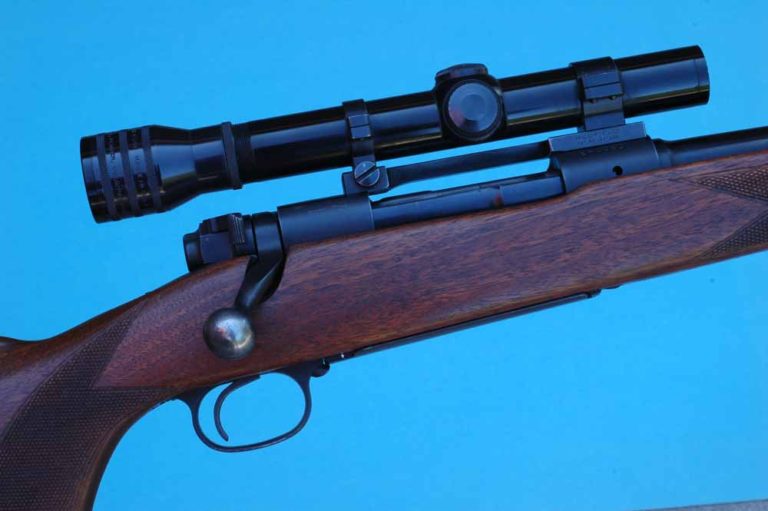
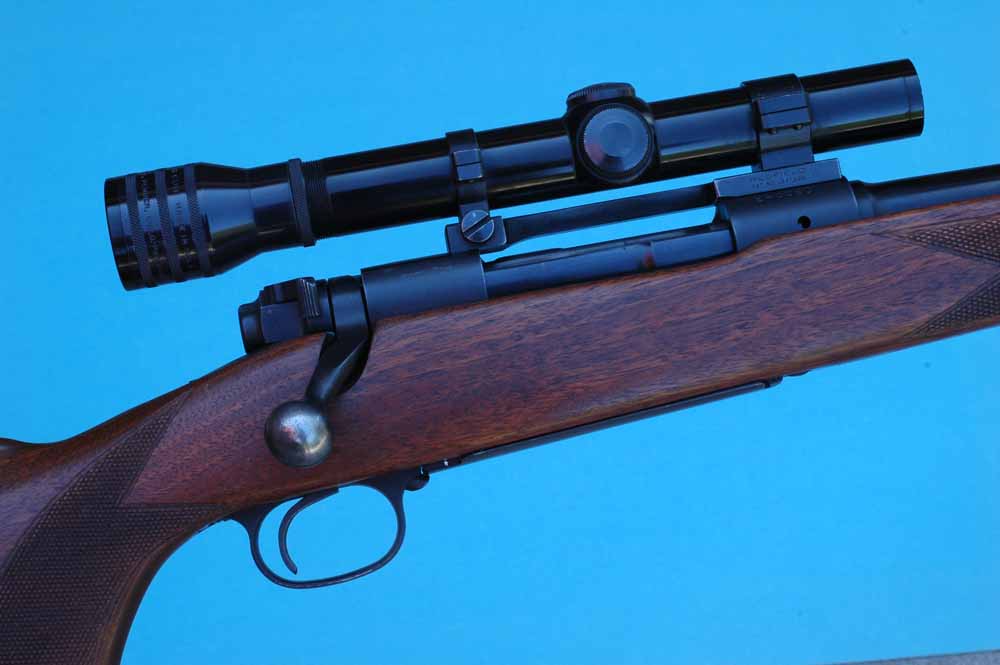
Wayne van Zwoll explains differences between rifle scopes. Matching the scope to the rifle is important.
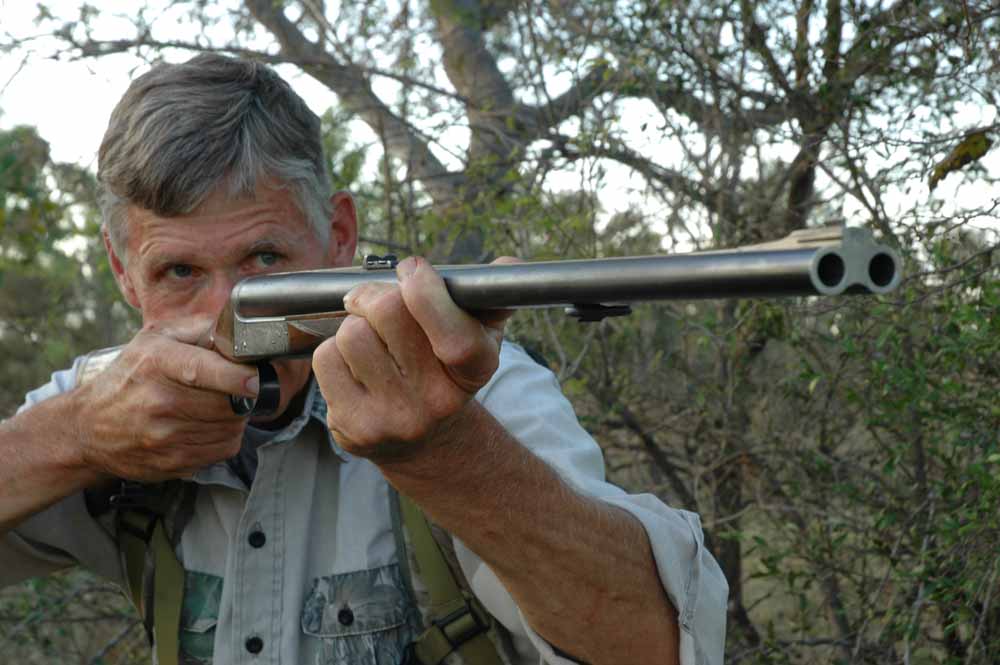
A lever-action carbine is as lithe under a scope as a sports car under a roof rack. On a double rifle, optics make no sense at all. While my aging eyes need glass for sharp aim, not all rifles need glass to be useful. Many animals are shot very close to the muzzle.
In Africa, firing at dangerous game farther than you can toss a stone is bad form. In typical whitetail cover, and probing the lodgepoles in elk country, you shouldn’t need a scope.
Still, a low-power scope properly mounted is as fast as irons. Actually, it’s faster, because reticle and target appear in the same focal plane.

Your eye sees both in sharp detail. And modest magnification helps when you must thread a bullet between branches. Up to 3x or even 4x, magnification won’t slow a practiced shooter. Field of view shrinks as you boost power – but a rifle sight is not a picture window.
The first scopes for big game were tidy, though steel tubes made them relatively heavy. Hunting rifles in those days weighed 7 ½ to 8 ½ pounds without a scope, so the extra heft (12 to 18 ounces for a 4x or 6x steel sight) remained a modest proportion of finished weight.
Also, objective diameters of less than 40mm kept bulk to a minimum while permitting use of low rings.
Surely, there were big scopes back then, from Lyman’s limousine-length Super TargetSpot to the enormous Unertl, with a recoil spring the diameter of a rolling pin. But these fine and costly sights made sense only on heavy-barreled rifles with thick walnut stocks – rifles for dusting distant woodchucks with the likes of the 2R Lovell and .219 Donaldson Wasp.
Besides jacking a rifle’s center of gravity up from between your hands, a heavy, bulky scope in high rings pulls your cheek from the stock. Losing comb contact, you compromise rifle support and leave your head bobbing about in space.
The problem is especially acute when you affix a big scope to a rifle designed for iron-sight use. This arrangement turns the comb into a baton that swats your chops on recoil.
Stocks on early rifles fitted with iron sights suited scopes like the popular 2 1/2x Lyman Alaskan and 4x Noske, whose 7/8-inch tubes and straight front ends permitted very low mounting.
Such slender tubes have now gone the way of bias-ply tires, but 1-inch scopes with tube-diameter objectives have hung on. Some of these are fixed-power models, like the Weaver K2.5. Many are variables, commonly 1-4x or 1.5-5x, like the Leupold VX3 on my Montana .375. All have much better optics than their steel forebears.

Many shooters think compact sights can’t offer bright images. Wrong. Image quality – sharpness as well as brightness – depends mainly on the lenses and their coatings. In normal light, your eye’s pupil contracts.
If a scope’s exit pupil (objective diameter / magnification) is larger than your eye’s pupil, you can’t use all the light coming through the sight. Only in dim conditions does big front glass help at all.
For most big game hunting I favor 4x magnification. The 32- to 40mm objectives common to the 4x provide 8 to 10mm of exit pupil – more than your eye can use even in total darkness. A 6×36 scope delivers a shaft of light big enough for any shooting conditions.
Want more power? Well, probably you don’t, at least for deer and elk. If you’re shooting small animals at distance, you may benefit from higher magnification. But you needn’t endure scopes with maws the size of motorcycle mufflers. A 3mm exit pupil suffices for Dogtown – as in a 14x scope with a 42mm objective.
For big game, the long-popular 3-9×40 is still a top choice. And as competition in this slot is brisk indeed, you’ll find bargains at every price point. My latest rifle, a .25-06 by talented gunmaker Patrick Holehan, wears a 3-10×42 Swarovski, about as big a scope as seems appropriate. I’d have been as pleased with a 3-9×36, or Leupold’s 2.5-8×36.
Another concern when choosing a scope is free tube – space available for rings. In days of yore this was no issue at all, because scopes were of fixed magnification and had tubes as long as a swimsuit model’s legs.
Now scopes are short-coupled, with big turrets and power-selector rings that take up lots of tube. You’re wise to consider where the scope must sit on the rifle to give you proper eye relief.
Some scopes now are AR-specific, following the market to rifles with a mean look and no soul. The high line of sight mandated by the high comb of ARs, and the full-length Picatinny rail standard on models intended for scope use give you more options that do bolt- or lever-action rifles. Rails give even short-coupled scopes plenty of latitude fore and aft.
Leupold catalogs several sights specifically for the AR, from the CQ/T 1-3×14 scope to a 1×14 Prismatic sight to the new DeltaPoint reflex red-dot sight with magnesium housing. I have a Mark AR 3-9×40 on an AR in 6.8 SPC.
No, I’m not categorically opposed to big scopes. Or to liberal politicians or people who drive 55 in the left-hand lane. But sights should not over-burden rifles. And if your rifle’s sight accounts for more than 15 percent of its overall weight, you might ask yourself: Do I really need all that glass?
Next Step: Get your FREE Printable Target Pack
Enhance your shooting precision with our 62 MOA Targets, perfect for rifles and handguns. Crafted in collaboration with Storm Tactical for accuracy and versatility.
Subscribe to the Gun Digest email newsletter and get your downloadable target pack sent straight to your inbox. Stay updated with the latest firearms info in the industry.