
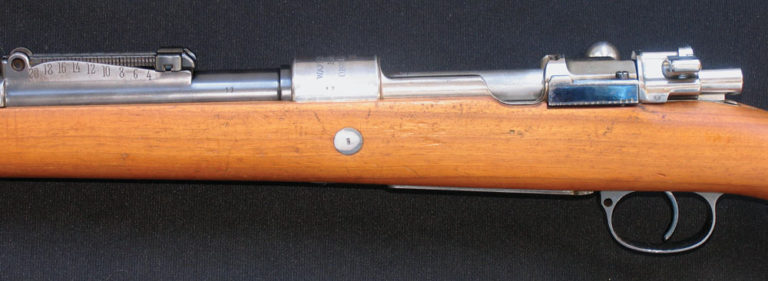
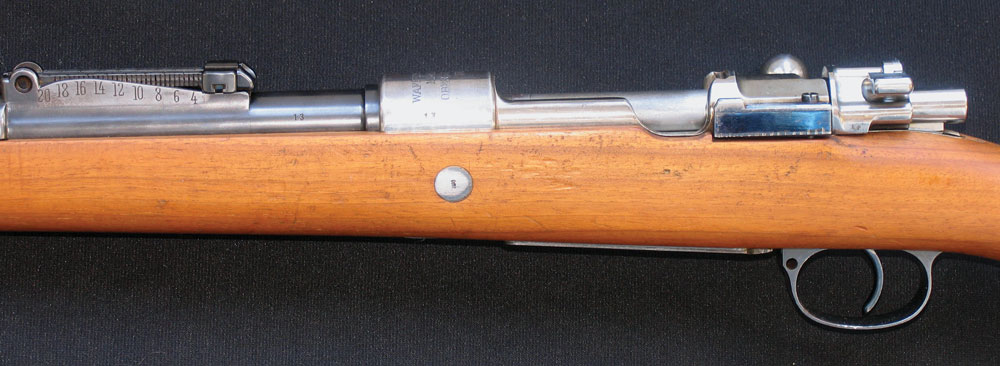
Greatness in firearms is a pretty subjective judgement. But when a gun is nearing its hundredth birthday, hasn’t been out of production for much longer than somebody’s coffeebreak, and is still a favorite of hunters and precision shooters everywhere, calling it great may be an understatement. About the closest estimate one can acquire of the quantities of the Mauser Model 98 produced thus far is somewhere between 91 million and 125 million. It’s hard to come up with a firmer figure, for the rifle was produced in twenty or more countries, most of which used it as a military rifle, and another large group of nations produced clones, copies and ripoffs of the original, often in quantities so vast they couldn’t give a production figure if they wanted, and they don’t want.
Only the Russian AK-47 design comes anywhere close to the production figures of the Model 98. It’s probably not that close, but no one knows for sure. The Chinese and Japanese produced Model 98 rifles and copies in vast quantities, both for themselves and for client states. The Belgians, Poles, Austrians, Czechs, Iranians, Yugoslavs, Turks, Spaniards, Argentines, Brazilians, Mexicans and others produced military M98s in quantity; others produced near-copies and “improvements” for military use like the U.S. M1903 and ‘03A3. (Yes, the Mauser firm was paid at least $400,000 in royalties until at least 1914.) There were also the U.S/British P17/P14 “Enfields” and the late French MAS derivatives in this category.
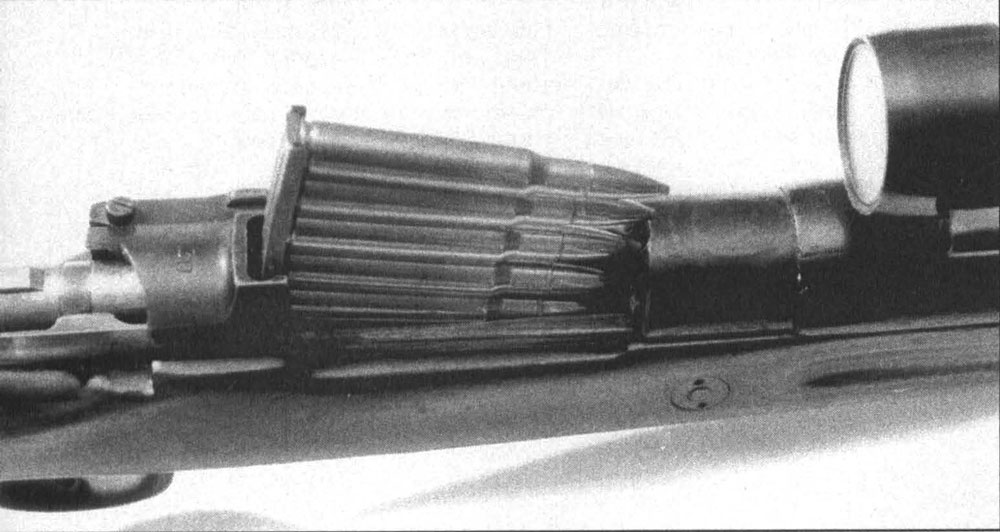
And that’s just the military rifles. Handmade Model 98s in calibers up to 50 Browning are still being turned out by builders like Fred Wells of Prescott, Arizona. French, Dutch, British and Italian sporting rifles and actions have been made in standard, miniature and magnum lengths. The Finnish Sakos and the Swedish Carl Gustaf and Husqvarna are all 98-type actions. Many of the countries which used the 98 as a military rifle produced and most still produce the action as a hunting piece. The famous Swiss annual Waffen Digest recently (1992 edition) carried a couple of unusual announcements: One was descriptive of a “new” product called Mauser Jagdrepetierer Modell 98, a rather familiar model introduced by the mother firm, Mauser-Werke, Oberndorf-am-Neckar, absent from the thriving market for their most famous product for 46 years. Waffen Frankonia also introduced their new K98k military rifle, actually a reworked and specification updated military rifle with new parts and stocks, as and where necessary.
So why introduce — at fairly high prices, incidentally — technology almost a century old as a new product at a time of worldwide economic recession? Simply put: demand. The Mauser 98 is closer to a true basic product than nearly any other firearm, and though the analogy seems strained, it occupies a market position similar to eggs, flour or rice.
If one needs an accurate rifle for hunting, sniping, experimenting or target shooting, the ancient three-lug “safety” action is a fine place to start. Indeed, structurally, there’s little to choose between any M98 and the latest bolt guns from, say, Weatherby or Remington; there have been refinements, but the nuts and bolts have been very similar for a long time, and almost anything in the way of doo-dads one can imagine or concoct for a Model 70 Winchester can be acquired, built or purchased for the Mauser.
Of course, for civilians, even purchasing an old military action for very little money and doing the full custom job on it doesn’t save a penny over a top-of-the-line commercial product. The main difference is, when the consumer reworks his own Model 98, he gets exactly what he wants — no more, no less — and if he can do some or all of the work, he really can save a few bucks. What is unique about this time-honored process is that such rifles can be built up slowly, on a sort of self-regulating installment plan, adding a new trigger in January, scope or mount in March, stock in June or July, total refinish some other year. That you cannot do with a new rifle which comes in a fancy box.
But there’s more to the Mauser 98 saga. From 1898 to about 1962, military Mausers were built in considerable variety. All specifications called for minimum vise-secured accuracy level under two minutes of angle. Most performed better. Of course, given the limitations of a broad V rear sight and skinny front blade, or pyramidal “barleycorn” post, shooter-limited factors meant such a level of accuracy was seldom maintained in the field. There were no mystery alloys used in Model 98 Mausers, and if the odd stamped or roughly soldered or welded part found its way onto a wartime K98k, it was always someplace where it bore little stress. The 98s were made for so long that whole metallurgical techniques changed, but, surprisingly, this had almost no impact on the rifle’s quality or durability. Even the military finishes of the rifles generally exceeded the workaday qualities of most of today’s civilian firearms.
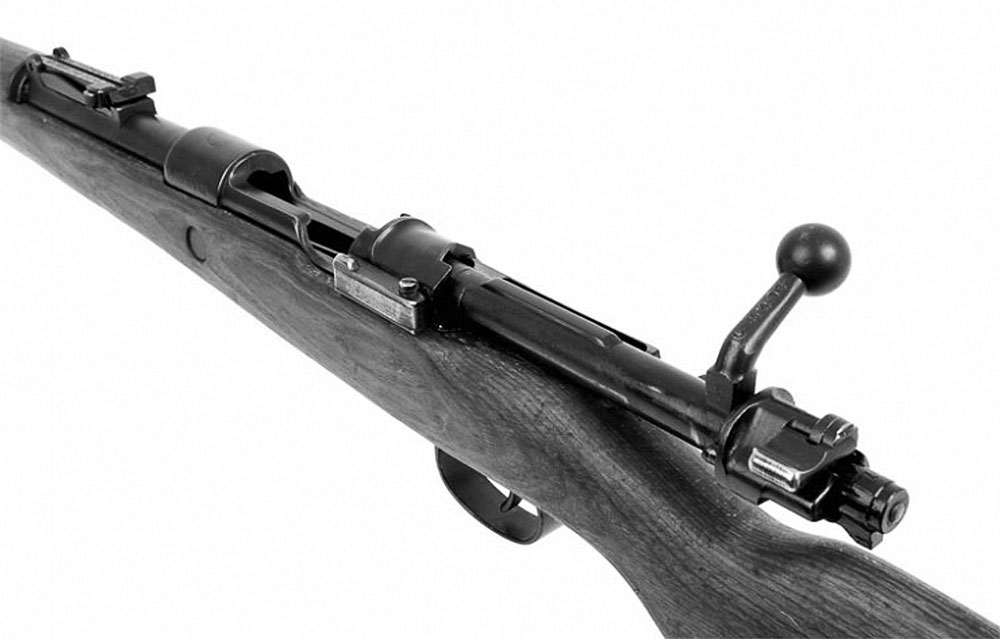
Most original specification rifles from about 1898 through World War II used what are today considered rather primitive ordnance steels, but carefully heat-treated so that while the core remained very soft, the surface was often as high as 62 on the Rockwell C scale. FN rifles and many from Eastern Europe used tighter dimensional tolerances overall, used far more sophisticated metallurgy, and show lower hardness figures. However, this latter group comprises generally superior actions, far more durable.
I am often compelled to repeat to shooters and collectors that hardness very decidedly is not strength; most materials in use today develop their strengths at hardness levels way below the vogue of forty years ago, and are, in fact, dangerous at high hardness levels. Hardness is relevant in any respect only to a given material in a given application and lately, more often than not, optimum strengths are obtained at levels far below what was popular thirty to forty years ago. When someone in a gun store begins to talk hardness level as some kind of quality determinant, your best response is to turn on your heel and leave. The very strongest bolt actions in the world, the Japanese Arisakas, are quite soft. Dimensions, design, venting and strength determine the overall safety and quality of a rifle action; hardness alone as a factor is bunk. Read Hatcher’s Notes to get a more specific idea of how these matters translate to reality.
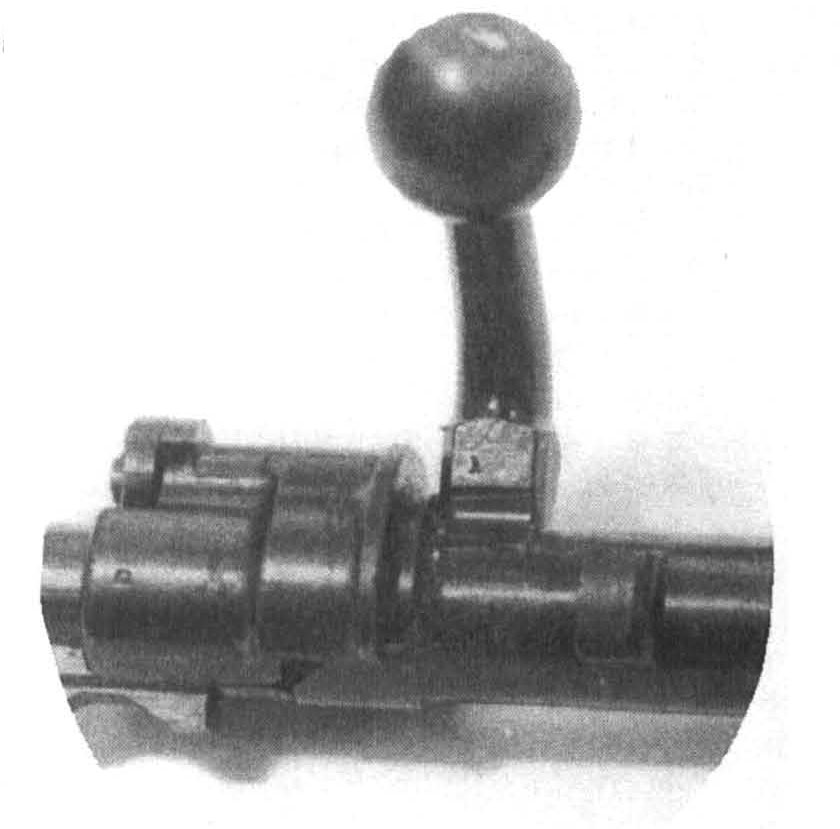
The engineering factors which made the M98 a landmark were simple progressions from the M1892–1896 designs, but they were significant enough that few countries could avoid discarding whatever they had been using to adopt the new system. Rifles just three to ten years old in military service became second-line materiel in most of the world. The third or “emergency” locking lug, the inside receiver ring collar, and the vastly improved, safer, more reliable firing mechanism with its lockout to prevent premature ignition with a broken firing pin, combined with a conglomerate of earlier Mauser evolutionary features and improved metallurgy to produce a rifle which looked and worked very much like its predecessors. In terms of safety under rough conditions and rapid-fire, though, the Model 98 stood alone.
It surprises many collectors and shooters that relatively few Mausers were actually built by the designing firm. “Few” is, of course, a relative term: The Oberndorf factory produced millions. But almost from the beginning, demand was so vast and deep that firms in Europe and elsewhere were licensed to produce the guns. Loewe, DWM, Steyr, Sauer and Son, Fabrique Nationale, the Czech works at BRNO, Radom in Poland, all the German government arsenals and all their subcontractors, and as many as a hundred small factories in Central Europe were producing actions and/or complete rifles by the mid-1920s.
If one wishes to analyze the impact Paul Mauser had on the world, he should dig through the cartridge specifications in one of the better reloading manuals and refer back to Paul Mauser’s 1880s and 1890s cartridges. He’ll find almost every currently popular medium-power rifle cartridge owes much to the compatible cartridges Mauser designed from their inception to be quickly and cheaply adapted to standard rifle actions. The Mauser originals — 7.92×57, 7×57, 7.65×53 (sometimes called 7.65×54) — and the Brenneke cartridges developed in direct consultation with the Mauser firm do not resemble the 308, 30/06, 270 and others by accident; from case heads to bottlenecks, modern cartridge configurations are virtually all derived from original Mauser ideas.
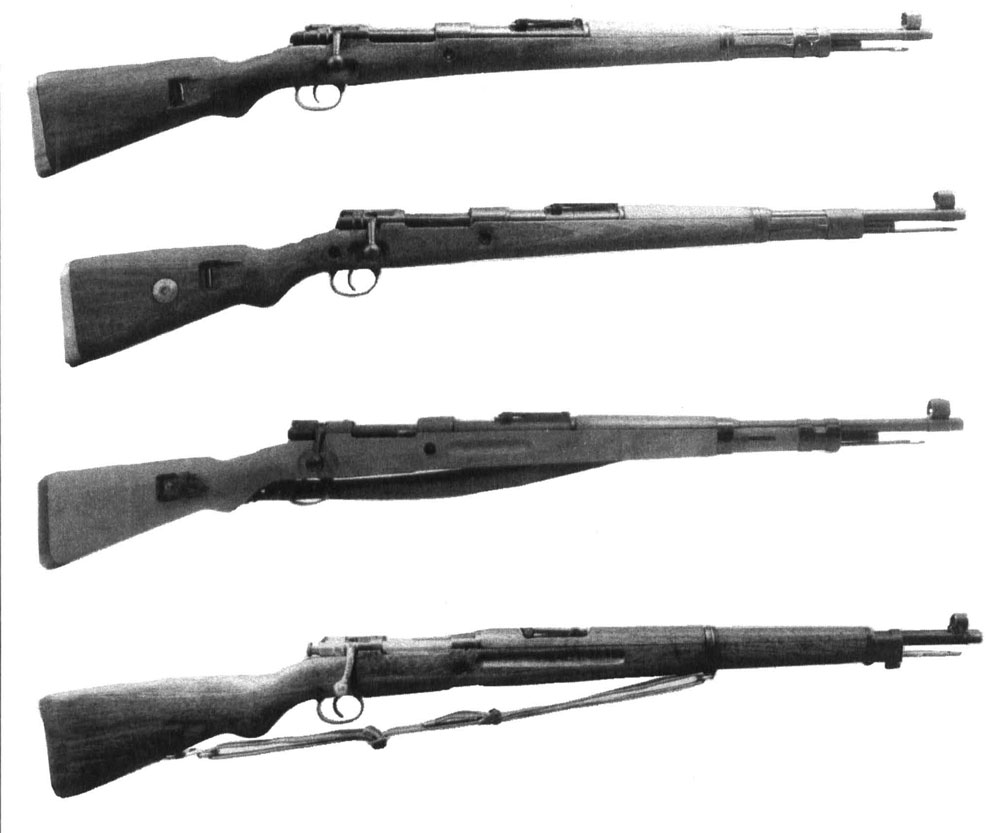
Before World War I, the Turks, Argentines, Chileans, Mexicans, Brazilians and many others had adopted the military 98. By the mid-1920s, there were already so many Model 98 Mauser versions and variants that a complete listing would’ve been almost impossible. And by the late 1940s, another World War later, such a catalog was literally impossible. Many countries had ordered rifles in that period from several manufacturers and in several configurations and lengths. Rifles were also refurbished, of course, and calibers were sometimes changed.
Brazil, at one time or another, for example, ordered quantities of rifles from virtually all the major European manufacturers and in 1954 began to manufacture receivers at Itajuba Arsenal. So when one says “Brazilian Mauser,” he may be describing a Model 1908 29-inch long rifle, similar to the German Gew.98 or K98a revision built by DWM; a Czech 08/34, almost identical to the Nazi K98k but with a 22-inch barrel and in 7mm; the Oberndorf-built M1935 long rifle, essentially a later clone of the original Model 1908, the “2nd Variation” 08/34; various rifles shortened to 24 inches and barrels rebored to 30-06 and appropriately modified; the M1954, a 30-06 rifle receiver built as such, but completed with parts left over from all kinds of surplus rifles, including German 98ks; or as many as a dozen other fairly obscure variants ordered in small quantities for special purposes or from firms unwilling to advance normal credit to the Brazilian government and therefore delivered only on a cash in advance basis.

The most common general action configuration of the M98 Mauser is the so-called “large ring, standard length.” The receiver ring measures 1.410 inches. The “small ring” rifles measure 1.3 inches. There are also differences in overall configuration, but the ring size is readily discernible and is, therefore, the main identifier. The standard action is 8.75 inches long; the “short” action measures 8.5 inches in length and, at 43 ounces, is 2 ounces lighter than the standard length. There are also large ring, small thread actions which accept M93/95-style barrels, and these — especially those built by FN — are very handy to gunsmiths who wish to stock actions that can be delivered in a variety of configurations.
However, the differences in size are minimal; a person chooses one or the other usually based upon aesthetics or, more commonly, what’s available at a given time. The truly short or miniature actions and the magnum length units are either carefully modified and sectioned militaries or civilian actions. Virtually any Model 98 action that has been checked for cracks and has been rebarreled with correct headspace is quite safe for any standard cartridge which can be stuffed into it. Smiths have become adept at opening up magazines and adapting receivers even to the longer magnum rounds.
But I have always been fond of shooting military rifles, in general, and Mausers, in particular, in their original configurations. The performance is surprising, the variety amazing, and the original cartridges are at least as good as the 30-06 and 7.62×5lmm rounds to which many were later converted.
In the six years or so since GCA ‘68 was modified to allow curio and relic firearms to enter the country again, quite a variety of Mausers have entered. The pictures accompanying and the information with them will supply some specifics, but I’ll relate some general data here.
The first big batch of Mausers to enter the U.S. recently arrived from China, and encompassed virtually all eras and nearly all manufacturers. The Chinese ordered millions, made more millions, apparently bought used specimens of other country’s service rifles after both World Wars, and may have gotten some from the Soviets. So the variety was startling. I saw several hundred rifles, which ranged from truly oddball 16½- to 17-inch barreled 8mm carbines to standard German-issue Gewehr 98s from World War I, German Standard Modell rifles, K98ks in German-issue style and complete with World War II fits and codes, and just about everything else one can imagine finding its way to that part of the world. Since these rifles saw as much as sixty years of hard duty, most were pretty beat up, though some were far better than average.
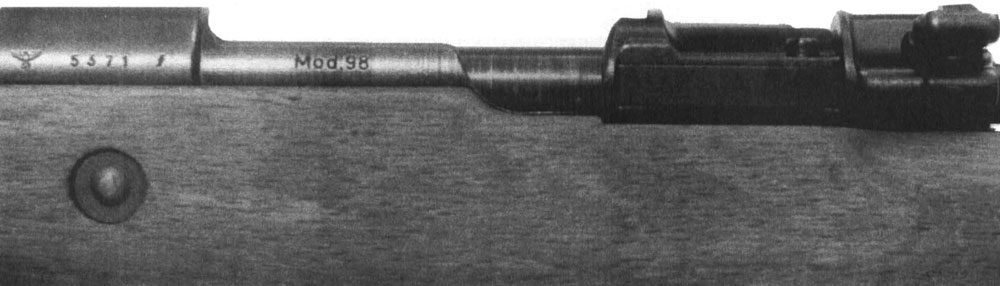
Springfield Sporters (Penn Run, PA) brought in most of the Model 98 Mauser supply from Yugoslavia. These were mostly rebuilt in Yugoslavia, and to very high standards. There were several variants, including the enormous quantity of VZ.24/G.24t rifles captured from the Waffen SS; K98ks and refurbished G.98s from the same source; Yugoslavian-built pre- and post-World War II rifles; Czech contract rifles from the late ‘20s and the ‘30s; and oddments of other Central European Mausers captured by the Yugoslavians.
These rifles, in addition to being well-maintained and beautifully rebuilt, contain more of the “if this rifle could talk” history collectors appreciate than most other hardware on the market and genuinely deserve a place in any European Mauser collection, despite — maybe because of — the applied Yugoslavian markings.
They’re also good actions for conversion, although most bear mint-like 8mm barrels, and throwing them out would be foolish. Century International Arms supplied virtually all the Latin American Mausers pictured within this article. If the close-ups reveal anything, it’s that the “export” guns were often made to higher standards than those for German domestic consumption. And why not? Foreign contracts were open to competitive commercial bid and nothing was locked in automatically. Most were made to very high standards, like the best sporting rifles of the period. And since I had an opportunity to compare directly with German rifles of the same years, it was pretty obvious that finish quality was higher on the DWM, Steyr, and even Mauser/Oberndorf guns for Latin America. What was interesting was the shooting quality delivered down-range.
Before developing that data, however, let me note that every Mauser I shot that’s pictured here was in the very best available condition. This cost me extra; it’ll cost you extra, but it’s dollars well spent. It always pays off. Of course, this caution does not apply so much if you’re doing a full-house sporter conversion; Century sells actions in various conditions, already stripped of their barrels and wood; often, complete rifles in fair to good condition cost less than the actions. But if you mean to do any shooting as-is, get the best condition available. If you’re a collector, this is especially true. Pay the extra money, and it’ll always be reflected in the gun’s long-term value. It also always costs much more to restore a clunker than to purchase a better rifle in the first place.
It’s also wise to shoot the best ammo you can. Surprisingly, the quality of surplus ammo is now very high. The FN Belgian 7.65mm Argentine and the San Francisco (Argentina) 7.65 shot as well as any military ammo I’ve ever shot. Yugoslavian PrviPartizan and Yugoslavian surplus 8mm, also from Century, performed beautifully and very accurately, as did the Yugoslavian 7×57.
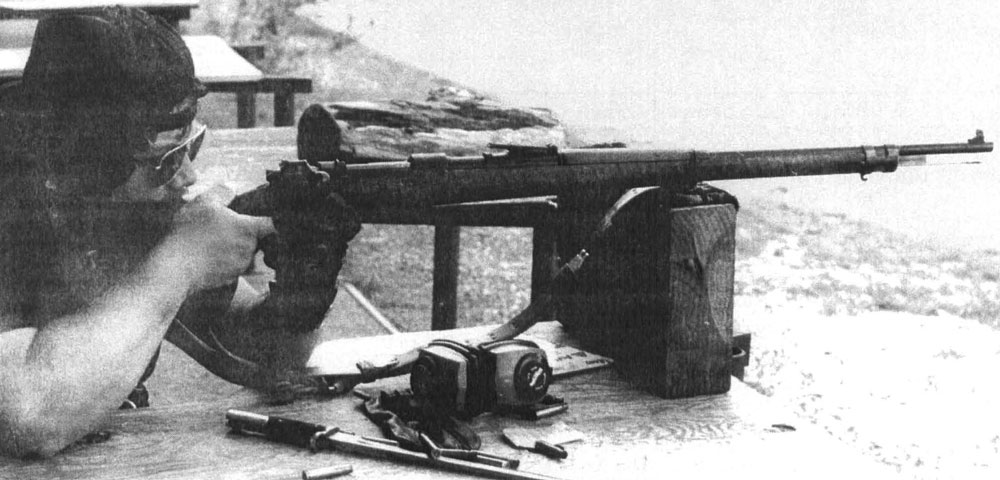
Several of the rifles shot very close to MOA, and the Peruvian M1935 7.65 — which looked quite rough but sported a superb bore — actually delivered a 7⁄8-inch group at just over 100 yards. The 7mm long rifles also performed exceptionally, especially the two M1935 Brazilian Mausers, one of which was the proverbial gnat’s eyelash below the Peruvian gun in on-target performance.
The Chilean Steyr M1912 was not far behind. Even the ugly M1954 Brazilian — as rough a rifle as I’ve ever seen and dared to fire, but sporting a pristine bore and perfect head-space even by commercial standards — performed right up to the standards of my National Match M1 in 30-06. The Yugoslavian PrviPartizan 7mm 175-grain loading shot to point of aim in the Brazilian M1935 at 300 yards, but with the sights set for 100 meters. The trajectory suggested high velocity and excellent power, but I determined — since there were no signs of high pressure — chronographing was unnecessary.
The little Argentine M1909 carbines — one an Argentine-built DGFM, the other a DWM from Germany — delivered 1½-inch groups at 100 yards. Those are five-shot groups. I fired three rounds of Norma’s excellent softpoints per gun and did a little better.
Again, as noted early on, these were best groups. No Model 98 sight is quite discriminatory enough to deliver this sort of accuracy anyway, except from a rest, and even then, eyesight limitations and the hard realities of real shooting don’t allow the shooter to do that consistently. But the potential is there. I’ve lately been recommending B-Square’s long eye relief scope setups because they don’t demand anything be drilled or ground up, and the military Mausers thus retain their collector’s value. Also, the stripper loading capability is maintained, and the bolt handles need not be modified.
I’d be remiss if I didn’t mention the tradeoff equation with high-powered rifles. That is, the little 6½- to 7½-pound carbines are light and handy, but the Mauser buttplate is downright abusive, and short barrels generate serious muzzleblast.
The 29-inch barreled long rifles are cumbersome, but sweet to shoot and easy to balance, even over long sessions. The 22- to 24-inch barreled guns, as one might expect, are about midway between the two. Military ammo in 7mm and 8mm is loaded stiffer and shoots better than most American commercial ammo; in fact, I recommend RWS or Norma factory loads in 7.92×57JS (8mm) or handloads. American 8mm is so underloaded that European publications list it as a whole different caliber.
Paul Mauser died in 1914. But you can bet on it: Come 2014, his last major rifle design will be alive, well, and living almost everywhere.
This article first appeared in the 1994 edition of the Gun Digest.

Next Step: Get your FREE Printable Target Pack
Enhance your shooting precision with our 62 MOA Targets, perfect for rifles and handguns. Crafted in collaboration with Storm Tactical for accuracy and versatility.
Subscribe to the Gun Digest email newsletter and get your downloadable target pack sent straight to your inbox. Stay updated with the latest firearms info in the industry.



The M98 has THREE lugs, not two. And it’s not a “forerunner” of the modern rifle, it’s the prototypical modern rifle, and is still in production in German, the Balkans, Spain, and probably a half dozen other places. Moreover, it isn’t in many ways as quick a combat rifle as the Enfields and Lee-Enfields (the Number 4 is NOT a “Lee-Enfield) but it is vastly more versatile. The numbers are even easier to grasp. The rifle was the standard of over half the world, including Germany and China, through two world wars, and for about half a century. M98’s were designed to service sporting and military customers from the get-go, and the cartridges were likewise world beaters and trend setters.
Yes, I wrote this article twenty years ago.
Actually, the Model of 1898 Mauser is not the forerunner of the modern bolt action. It IS the modern bolt action. They’re still being made, 115 years later, in Spain, Germany and Serbia and elswhere. And the ’98 uses THREE locking lugs, not two.
To understand the numbers–which, by the way, I didn’t get from some clown in a magazine article, but from China, Germany, and elsewhere, including the original “manufactory” in Oberndorf–all one needs to know is they were the standard of China and most of Europe for about half a century, including BOTH WORLD WARS.
The Enfields are definitely slicker actions, ten rounds in the magazines, too. But overall, the Mausers lasted MUCH longer. And they’re much more amenable to updates, modernization, lightening, and so on. They were planned, from the very beginning, as both commercial and military rifles, which is why they are still so common.
Yes, I’m the guy who wrote this piece, Jim Thompson.
I am still a tad befuddled why my old account here won’t work.
Perhaps someone hacked it and changed the password.
The Mauser design is the forerunner of the modern bolt action. The Mauser 98, the strongest, as it uses two lugs, while the earlier used one. Hey, just like reading the article!
As I am not a student of the ’98 but certainly aware of its historical provenance, I had no idea of the sheer number produced. We of the “modern” age would have thought that the Soviets had produced many more AKs but that just shows myopia, I suppose.
I might argue that the even older Lee-Enfield SMLE and NO. 4s were better combat rifles than the ’98, but wouldn’t state that they are better for everything else.
Garry James said it best: “Only arms made before 1920 are interesting.”
The Mauser M98 is NOT out of production, obviously. It hasn’t been for 115 years as I write this.
The M98 has THREE lugs, not two. And it’s not a “forerunner” of the modern rifle, it’s the prototypical modern rifle, and is still in production in German, the Balkans, Spain, and probably a half dozen other places. Moreover, it isn’t in many ways as quick a combat rifle as the Enfields and Lee-Enfields (the Number 4 is NOT a “Lee-Enfield) but it is vastly more versatile. The numbers are even easier to grasp. The rifle was the standard of over half the world, including Germany and China, through two world wars, and for about half a century. M98’s were designed to service sporting and military customers from the get-go, and the cartridges were likewise world beaters and trend setters.
Yes, I wrote this article twenty years ago.